Homepage ↦ Fill Out a Valid Virginia Irp Application Template

Fill Out a Valid Virginia Irp Application Template

Modify Document Online
Structure

Navigating the complexities of interstate trucking operations requires adherence to specific registration protocols, among which the Virginia IRP Application form stands as a crucial document. Designed to streamline the process for trucking companies operating across multiple states, this form, as part of the International Registration Plan (IRP), allows for the registration of fleets in participating jurisdictions, thus facilitating the calculation and distribution of registration fees based on distance traveled in each state. The application encompasses a comprehensive range of details starting from carrier information, which includes the legal name, contact details, and taxpayer identification number, to intricate vehicle specifics such as make, year, VIN, and type. Moreover, it addresses weight information for each registered jurisdiction and outlines operational types and safety USDOT numbers, providing a thorough framework for both new registrations and updates to existing ones. Completing this form correctly ensures compliance with the Idaho Transportation Department's requirements, facilitating the smooth operation of trucking services across state lines.

Virginia Irp Application Example

VIRGINIA INTERNATIONAL REGISTRATION PLAN (IRP)
NEW ACCOUNT APPLICATION
Purpose:
Once your application is approved, you can add vehicles to your account online through the VIIM System or by submitting the Supplemental Application (IRP
1B). This form is also used to create new fleets, add or remove vehicles, and manage other fleet-related transactions.
For faster service, request user access to the VIIM System at https://www.dmv.virginia.gov/businesses/motor-carriers/viim-system.
Use this application to establish a new IRP account in Virginia. Would you like to take advantage of the new electronic application for original registrations
instead of submitting a paper application? Complete and submit your application online at viim.dmv.virginia.gov.
INSTRUCTIONS
Application Submission Information:
Completed applications and supporting documentation may be faxed, emailed, mailed or
dropped off at a DMV Customer Service Center.
Mail: Virginia Department of Motor Vehicles, Motor Carrier Services IFTA/IRP
PO Box 27412
Richmond, VA 23269-0001
Enter an email address to receive application status notifications:
Service Options:
Regular Mail
Allow up to 2 weeks for regular mail
delivery.
Special Express Mail
FedEx UPS USPS Expedited
Electronic Delivery
IRP cab card(s) may be downloaded and
printed or carried as an electronic
credential.
Note: If you choose UPS or FedEx, you must provide DMV your own prepaid label with
the application or email it to [email protected].
If your prepaid label is
not received within one business day of the invoice payment, your shipment will be
mailed by USPS. USPS expedited delivery can take 2 – 3 days.
Contact Information:
If you have any questions completing this application, contact Motor Carrier Services at:
Phone: (804) 249-5140
TTY: 711 or (800) 828-1120 (Virginia Relay)
Helpful Hints:
• To prevent processing delays, please read and follow the instructions precisely and
complete all parts of the application that pertain to your business operations.
• For important information about other state and federal requirements and steps to take
before submitting your application to DMV, refer to "Information for Interstate Motor
Carriers" (DMV 247) included with this form.
INSTRUCTIONS (continued)
Established Place of Business:
In order to apply for registration under IRP in Virginia you must either (a) have an
established a place of business in Virginia (a physical structure staffed during regular
business hours where business is conducted) OR (b) be a Virginia resident. Whichever
option you choose, the address you provide must be where your home or your business is
physically located — not a “virtual office,” a P.O. Box, or the address of another person or
business.
NOTE: Most owner/operators operating out of their home register based on Virginia
residency rather than based on having an established place of business in Virginia.
Please select one:
I have an established place of business in Virginia staffed during regular hours where
business is managed (additional documentation may be required upon review)
I am a resident of Virginia and will demonstrate Virginia residency.
If you are registering based on residency, DMV will need three proofs that you are a
resident of Virginia. Check any combination of the following:
Proofs of residency that DMV can verify electronically (no documents needed):
Business registered with the Virginia State Corporation Commission
Business principal owner Virginia driver's or commercial driver's license
Virginia vehicle title record
Proofs of residency for which you will need to submit documentation DMV
with your completed application (**cannot be older than 2 months):
Bank Statement** Rental/Lease Agreement
SS4 IRS Document (LTR147C)Business License
Deed or (Mortgage Statement**) Utility Bill**
Virginia Personal Income TaxFederal Income Tax
Virginia Real Estate TaxInsurance Policy
Postmarked U.S. Mail
(quotes are not acceptable)
IRP 1A (08/08/2025)
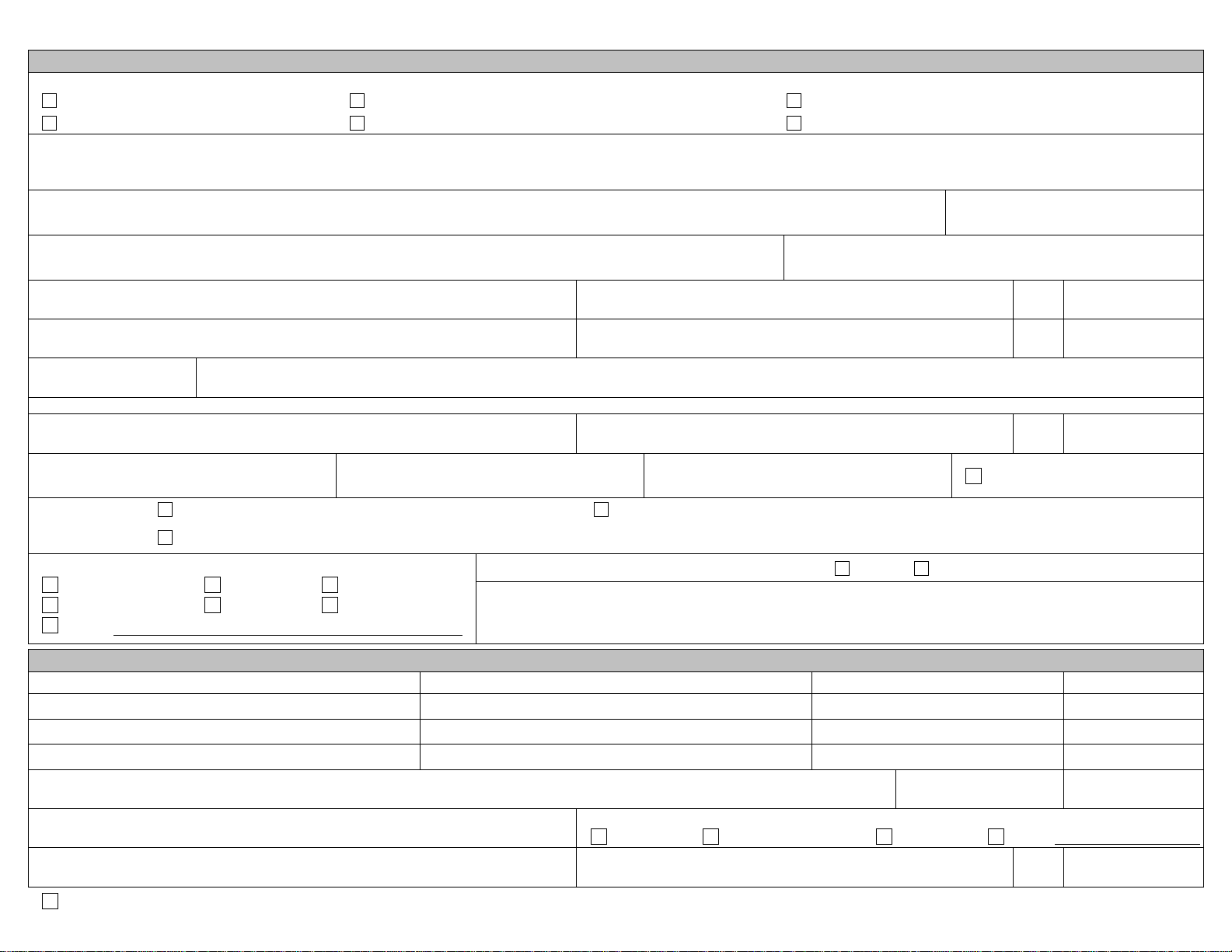
SECTION A: APPLICANT INFORMATION (* indicates REQUIRED)
*CHECK ONE TO INDICATE BUSINESS TYPE
Individual/Sole Proprietor General Partnership (include partners’ names below in Section B.) Limited Partnership
Corporation Limited Liability Company (LLC) Business Trust
(include general partners’ names below in Sec. B.)
*LEGAL NAME - If you are operating as an: Individual (sole proprietorship), then enter your full personal name. • Partnership, then enter the full legal name(s) of all partners.
• Any other type of business entity (partnership, corporation, limited liability company, etc.), enter the name of the business as registered with the Virginia State Corporation
Commission.
BUSINESS *LEGAL NAME
BUSINESS COMMENCE DATE
DOING BUSINESS AS (DBA) (Enter any DBA or trade name you are using in your business)
IRP ACCOUNT EFFECTIVE DATE (Registration will expire 12 months from this date.)
ZIP CODE
STATE
VA
CITY
*BUSINESS STREET ADDRESS (must be a physical address)
ZIP CODESTATECITYBUSINESS MAILING ADDRESS (if different from business location address)
BUSINESS PHONE NUMBER BUSINESS EMAIL
*Records Information - Physical location of records if different from business location
ZIP CODECITY
*STREET ADDRESS
STATE
*FEIN (if none, SSN or ITIN) USDOT NUMBER
*NUMBER OF VEHICLES IN FLEET
Check box if you have intrastate
operating authority in Wyoming
*CARRIER TYPE
Private — transports its own property
For Hire — Transports passengers or property for compensation
Rental — Rents to others or offers for rental vehicles with or without drivers. Rental
companies engaging in the business of renting vehicles in Virginia for a period of less than one
year are required to register with the Department of Taxation for the payment of rental tax.
*COMMODITY TYPE
Household Goods Logging Fluid Milk
General Freight Property Passenger
Other:
By checking 'Yes,' I consent to the acceptance of electronic notifications and acknowledge that all correspondence, including but
not limited to orders of suspension, will be sent electronically. I understand that it is my responsibility to immediately update my
email address if it changes to ensure proper notification of program compliance information and requirements.
Yes No
Would you like to opt into Electronic Notifications?
SECTION B: BUSINESS INFORMATION (* indicates REQUIRED)
OFFICER/PARTNER'S NAME (based on business type) EMAIL ADDRESS JOB TITLE OR ROLE DAYTIME PHONE
*CONTACT PERSON FULL NAME *TELEPHONE NUMBER
FAX NUMBER
*CONTACT PERSON EMAIL
*AFFILIATION WITH IRP ACCOUNT HOLDER
Owner Company Employee Agent Other:
ZIP CODESTATECITY
CONTACT MAILING ADDRESS (if different from business location address)
*The contact is authorized to conduct transactions and receive information pertaining to those transactions on behalf of the carrier/applicant.
IRP 1A (08/08/2025) Page 2 of 8
( )
( )
( )
( )
( )
( )
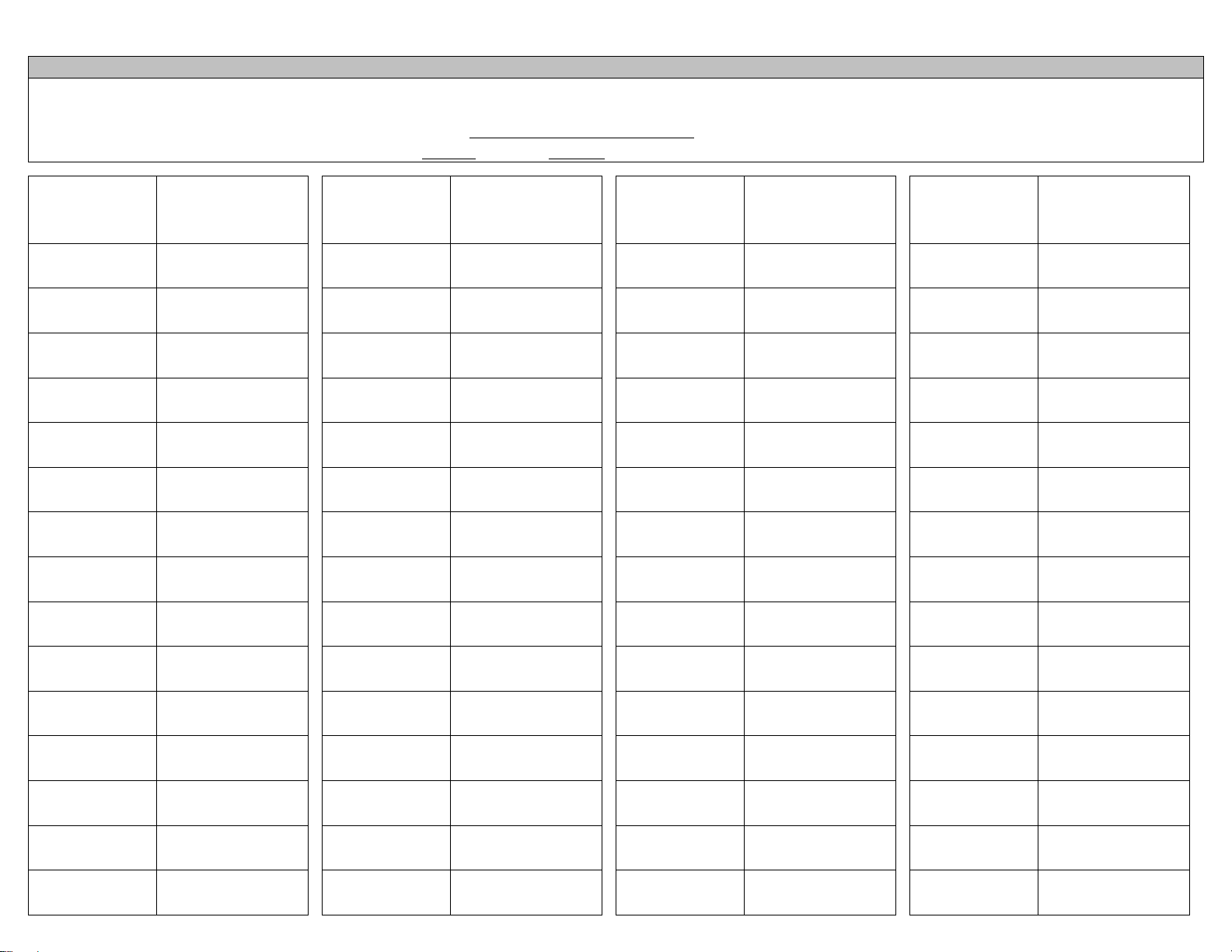
SECTION C: MILEAGE AND REGISTRATION INFORMATION
INSTRUCTIONS:
■
This is only applicable to applicants that are moving from other jurisdictions. If you are moving an account/fleet from another jurisdiction, enter the actual distanced traveled, for each jurisdiction, for the latest July
1st to June 30th IRP reporting period. Which jurisdiction did you move from:
■
Please indicate the year in which you are reporting distance.
JURISDICTION
ACTUAL MILEAGE
TRAVELED IN THE
REPORTING PERIOD
Alabama (AL)
Alberta (AB)
Arizona (AZ)
Arkansas (AR)
British Columbia
(BC)
California (CA)
Colorado (CO)
Connecticut (CT)
Delaware (DE)
District of
Columbia (DC)
Florida (FL)
Georgia (GA)
Idaho (ID)
Illinois (IL)
Indiana (IN)
JURISDICTION
ACTUAL MILEAGE
TRAVELED IN THE
REPORTING PERIOD
Iowa (IA)
Kansas (KS)
Kentucky (KY)
Louisiana (LA)
Maine (ME)
Manitoba (MB)
Maryland (MD)
Massachusetts
(MA)
Michigan (MI)
Minnesota (MN)
Mississippi (MS)
Missouri (MO)
Montana (MT)
Nebraska (NE)
Nevada (NV)
JURISDICTION
ACTUAL MILEAGE
TRAVELED IN THE
REPORTING PERIOD
New Brunswick
(NB)
Newfoundland &
Labrador (NL)
New Hampshire
(NH)
New Jersey (NJ)
New Mexico (NM)
New York (NY)
North Carolina (NC)
North Dakota (ND)
Nova Scotia (NS)
Ohio (OH)
Oklahoma (OK)
Ontario (ON)
Oregon (OR)
Pennsylvania (PA)
Prince Edward
Island (PE)
JURISDICTION
ACTUAL MILEAGE
TRAVELED IN THE
REPORTING PERIOD
Quebec (QC)
Rhode Island (RI)
Saskatchewan (SK)
South Carolina
(SC)
South Dakota (SD)
Tennessee (TN)
Texas (TX)
Utah (UT)
Vermont (VT)
Virginia (VA)
Washington (WA)
West Virginia (WV)
Wisconsin (WI)
Wyoming (WY)
TOTAL ACTUAL
MILEAGE
July 1, to June 30,
IRP 1A (08/08/2025) Page 3 of 8
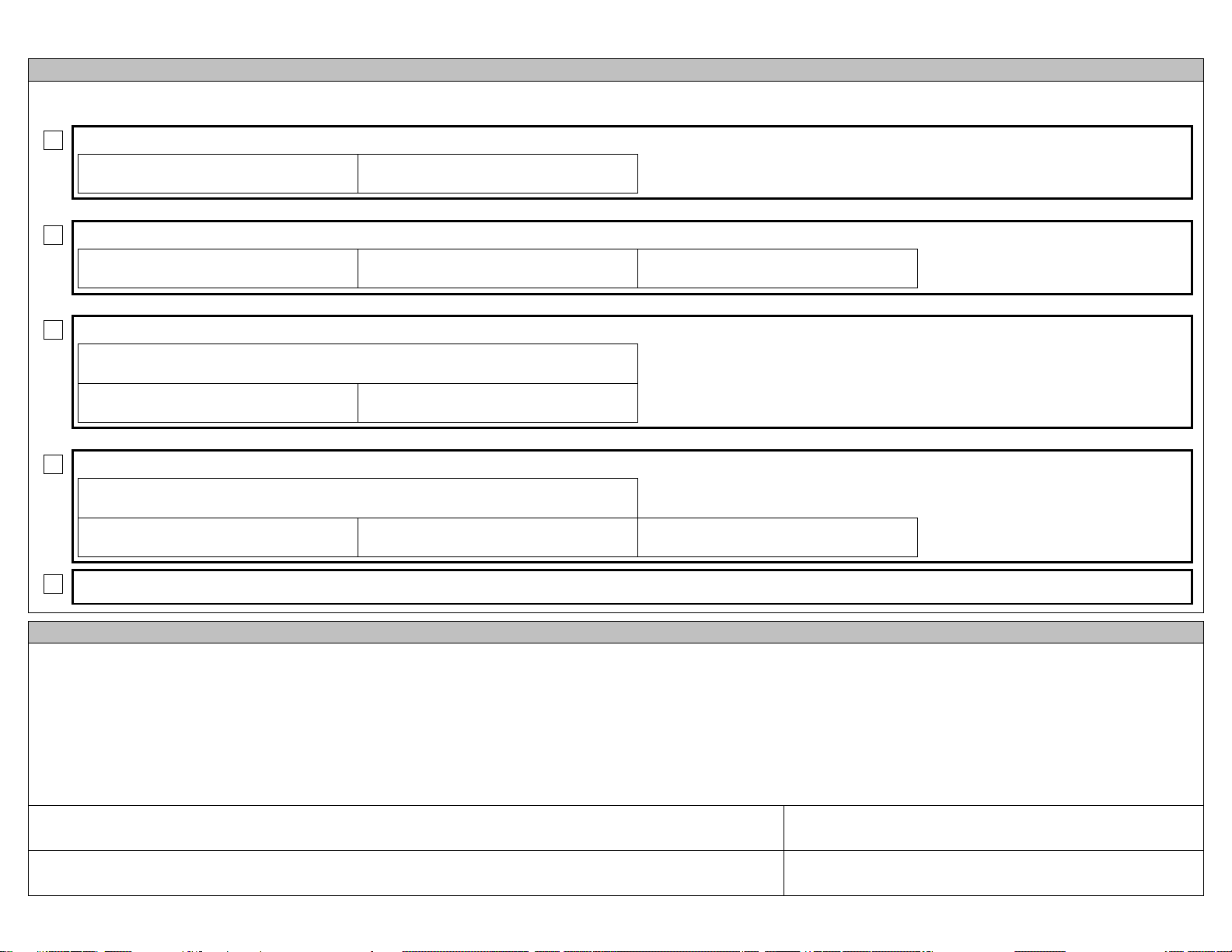
*Check and complete the appropriate section.
NOTE: To obtain a Virginia IFTA license and decals, submit a completed IFTA Licensing Application (RDT120).
Fleet is IFTA licensed in Virginia or applied for Virginia IFTA license.
VA IFTA ACCOUNT NUMBER FLEET IDENTIFIER NUMBER
Fleet does not qualify for IFTA - each vehicle has no more than 2 axles and a registered gross weight or gross combined weight of 26,000 pounds or less.
FLEET IDENTIFIER NUMBER
COMPANY NAME
VA IFTA ACCOUNT NUMBER
Fleet is IFTA leased to a Virginia based carrier who is reporting the fuel tax.
IFTA ACCOUNT NUMBERIFTA STATE (filing through)
Fleet is IFTA licensed in another IFTA jurisdiction.
SECTION D: INTERNATIONAL FUEL TAX AGREEMENT (IFTA)
FLEET IDENTIFIER NUMBER
COMPANY NAME
Fleet is IFTA leased to an out-of-state based carrier who is reporting the fuel tax.
FLEET IDENTIFIER NUMBER
IFTA ACCOUNT NUMBERIFTA STATE (filing through)
SECTION E: CERTIFICATION
NOTE: If you sign on behalf of the Authorized Representative, a Power of Attorney (POA) will be required.
I certify that all vehicles are currently insured by a policy issued by an insurance company licensed to do business in Virginia and that the policy provides at least the minimum amount of coverage as required by
Virginia law. My signature attests to knowledge of all state and federal motor carrier safety and hazardous materials laws and regulations when applicable and that I have read the record keeping requirements
and understand my responsibilities for keeping detailed records and actual mileage records in accordance with IRP.
I also certify that the individual indicated as the Contact is authorized to conduct transactions and receive information pertaining to those transactions on behalf of the carrier/applicant.
I also certify and affirm that all information presented in this form is true and correct, that any documents I have presented to DMV are genuine, and that the information included in all supporting documentation is
true and accurate. If the vehicles listed herein are leased vehicles, I certify and affirm that I or the company I represent have authorization to register the vehicles. I make this certification and affirmation under
penalty of perjury and I understand that knowingly making a false statement or representation on this form is a criminal violation.
AUTHORIZED REPRESENTATIVE NAME (print)
TITLE
AUTHORIZED REPRESENTATIVE SIGNATURE DATE (mm/dd/yyyy)
Failure to submit the required supporting documents (see instructions on first page of this form) will delay the processing of your application.
IRP 1A (08/08/2025) Page 4 of 8
DMV 247 (11/10/2025)
Information for Interstate Motor Carriers
The International Registration Plan (IRP), the International Fuel Tax Agreement (IFTA), and More
This brochure contains basic program information for interstate motor carriers applying to the Department of Motor Vehicle (DMV) for
registration under the International Registration Plan (IRP) and for licenses and decals under the International Fuel Tax Agreement
(IFTA). It also contains important information about steps that carriers may need to take to comply with other federal and state
requirements, including Unified Carrier Registration and the federal Heavy Vehicle Use Tax.
First Steps: Things to Take Care of Before Going to DMV
Especially if you’re just getting started in business as a motor carrier, you should review this checklist to make sure that you have taken
care of these items before you apply with DMV. This will ensure the quickest possible service.
Forming a business. When you apply to DMV, you will need
to provide information about your business, so it is essential
that you set it up before you try to complete an application.
Specifically, DMV will need to know:
- the type of business entity you have (sole proprietorship,
general partnership, limited partnership, corporation,
limited liability company, etc.);
- the official, legal name of the business (or the names of
the individual owners, in the case of sole proprietorships
and general partnerships);
- the business address(es); and
- the names of those authorized to conduct DMV
transactions on behalf of the business.
For more information: Office of the Clerk, State Corporation
Commission (scc.virginia.gov)
Registering your business with the State Corporation
Commission (SCC). When processing your application, DMV
will need to confirm you are properly registered with the
SCC and that the information on your DMV application
matches the information on file with the SCC.
Every business, other than sole proprietorships and general
partnerships, is required to register with the SCC. Also, sole
proprietorships and general partnerships that intend to
operate in Virginia under a fictitious name (such as a
“trading as” or “doing business as” name) are required to
register that fictitious name with the SCC. Even if your
business is organized outside of Virginia—a “foreign”
business entity— you must also make certain filings with
the SCC before doing business in Virginia.
For more information: Office of the Clerk, State Corporation
Commission (scc.virginia.gov)
Obtaining a Taxpayer Identification Number (TIN). Your
TIN is used to identify your business in federal and state tax
filings, but it also serves as an identifier for many other
purposes, including establishing your records at DMV.
Depending on the nature of your business, you may be able
to use a Social Security Number as your TIN. In other cases,
you may need to obtain a Federal Employer Identification
Number (FEIN) from the Internal Revenue Service.
For more information: Internal Revenue Service (irs.gov)
Obtaining a US Department of Transportation (USDOT)
number. To process your application, DMV will need your
USDOT number (if you are required to have one) or the USDOT
number of the motor carrier responsible for safety that holds
your lease agreement.
You are required to register with the Federal Motor Carrier
Safety Administration (FMCSA) and obtain a USDOT number to
operate a vehicle in interstate commerce that:
- has a gross vehicle weight rating or gross combination
weight rating, or gross vehicle weight or gross combination
weight, of 10,001 pounds or more, whichever is greatest; or
- is designed or used to transport more than 8 passengers
(including the driver) for compensation; or
- is designed or used to transport more than 15 passengers,
including the driver, and is not used to transport passengers
for compensation.
Also, anyone transporting hazardous materials that require
placarding of the vehicle must register, even if the vehicle is being
operated entirely intrastate. (Other than for hazardous materials,
Virginia does not require a USDOT number for carriers exclusively
operating intrastate.)
For more information: Federal Motor Carrier Safety
Administration (fmcsa.dot.gov)
However, those who operate exclusively within a federally
designated “commercial zone” are exempt from the requirement
to have federal operating authority. Also, federal operating
authority is not required to transport passengers for hire within
the Metropolitan Area around Washington, DC, but such
transportation may require a certificate from the Washington
Metropolitan Area Transit Commission, as explained below.
Obtaining federal operating authority (MC number). Any
motor carrier required to have a USDOT number is also
required to obtain an MC number from FMCSA if they receive
compensation for:
- transporting passengers, or arranging for their
transportation, in interstate commerce; or
- transporting federally regulated commodities, or arranging
for their transportation, in interstate commerce.
For more information: Federal Motor Carrier Safety
Administration (fmcsa.dot.gov)
Obtaining other required operating authority. You may
need other operating authority if, in addition to your
interstate operations, you either (a) transport passengers or
freight for hire point to point within Virginia, or (b)
transport passengers for hire in the “Metropolitan District,”
which is those parts of Virginia, Maryland, and the District
of Columbia that are subject to the jurisdiction of the
Washington Metropolitan Area Transit Commission (WMATC).
For more information: For transporting passengers or freight
intrastate within Virginia, see the Virginia Motor Carrier Manual
(DMV 248); for transporting passengers within the Metropolitan
District, contact the Washington Metropolitan Area Transit
Commission (wmatc.gov)
International Registration Plan (IRP)
What is it? IRP is an agreement among the lower 48 US states,
DC, and the 10 Canadian provinces for registering fleets of
vehicles that travel across jurisdictional lines and thus are
required to pay split or “apportioned” registration fees based
on the distance traveled in each jurisdiction.
IRP simplifies the process of calculating and paying those fees
by having you report all your information to a single base
jurisdiction, which is the jurisdiction where you have either
residence or an established place of business. You report your
fleet’s total distance over a 12-month reporting period, and
divide that total distance by the distance traveled in each
jurisdiction to calculate the fraction (“apportionment
percentage”) of apportionable fees that you owe to each
jurisdiction. (When you’re getting started and have no
distance to report, fees are based on the average
apportionment percentages of all fleets based in Virginia.) You
then pay all of those fees to your base jurisdiction, which in
turn distributes the money to the jurisdictions in which you
operated.
Who needs it? Registration under IRP is required for any
motor vehicle operating across jurisdictional lines that is used
to transport passengers for hire or that is designed, used, or
maintained primarily to transport property, and:
- has 2 axles and a registered gross vehicle weight or actual
weight in excess of 26,000 pounds; or
- has 3 or more axles, regardless of weight; or
- is used in combination and the actual weight of the
combination exceeds 26,000 pounds.
Are there any exceptions? Yes, the following vehicles are not
required to have apportioned registration:
- government-owned vehicles
- trailers and semi-trailers
- vehicles displaying restricted plates such as equipment,
dealer or farm plates if operated on an interstate basis
- recreational vehicles, such as motor homes, that are not
used in connection with a business
- tow trucks or wreckers displaying Virginia Tow Truck For-
Hire plates on an interstate basis into North Carolina,
Maryland, and/or Tennessee, if only vehicles or parts of
vehicles are being transported
- vehicles operated into Tennessee in interstate commerce
less than 10 miles per trip from the Virginia border
How to Apply? To apply for a new IRP account, please complete
the IRP 1A application. If you prefer to apply electronically, visit
VIIM.dmv.virginia.gov and select the link for the IFTA/IRP
electronic application.
Once your IRP account has been created, you can either request
access to the VIIM System or submit the IRP 1B application to
create your fleet and add vehicles. This process will calculate the
fees owed to each jurisdiction and provide an invoice. After
paying the invoice, you will receive your cab card and license
plates.
For More Information:
- All applications are available online at www.dmv.virginia.gov
under the Forms section.
- Access information for the VIIM System is available at
www.dmv.virginia.gov under the VIIM System section.
- For details about the International Registration Plan, Inc.
(IRP), visit www.irponline.org.
IRP has its own terminology, which you should get to know. Below are definitions (taken directly from the definitions section of the
International Registration Plan) of some terms used in this brochure and elsewhere in DMV’s IRP applications and publications.
Apportionable Fee. Any periodic recurring fee or tax required
for registering Vehicles, such as registration, license, or weight
fees.
Apportionment Percentage. The ratio of the distance traveled
in the Member Jurisdiction by a Fleet during the Reporting
Period to the distance traveled in all Member Jurisdictions by
the Fleet during the Reporting Period, calculated to six decimal
places, rounded to five decimal places, and multiplied by one
hundred.
Base Jurisdiction. The Member Jurisdiction, selected in
accordance with Section 305, to which an Applicant applies for
apportioned registration under the Plan or the Member
Jurisdiction that issues apportioned registration to a Registrant
under the Plan.
Established Place of Business. A physical structure located
within the Base Jurisdiction that is owned or leased, such lease
agreements shall be for no less than 12 months by the
Applicant or Registrant and whose street address shall be
specified by the Applicant or Registrant. The physical structure
shall have clear company signage and hours of operation
posted, be open for business and shall be staffed a minimum
of 20 hours per week by one or more persons employed by
the Applicant or Registrant on a permanent basis (i.e., not an
independent contractor) for the purpose of the general
management of the Applicant’s or Registrant’s trucking-
related business (i.e., not limited to credentialing, distance
and fuel reporting, and answering telephone inquiries).
Trucking-related business encompasses a wide range of
activities related to the transportation of goods by trucks.
These operations involve several key components, such as:
•
Logistics Planning
•
Fleet Management
•
Driver Management
•
Load Handling
•
Regulatory Compliance
•
Customer Service
•
Technology Integration
Rental Fleet. Vehicles the Rental Owner designates as a Rental
Fleet and which are offered for rent with or without drivers.
Reporting Period. The period of twelve consecutive months
immediately prior to July 1 of the calendar year immediately
preceding the beginning of the Registration Year for which
apportioned registration is sought. If the Registration Year 24
begins on any date in July, August, or September, the
Reporting Period shall be the previous such twelve-month
period.
Residence. The status of an Applicant or a Registrant as a
resident of a Member Jurisdiction.
Restricted Plate. A plate that has a time, geographic area,
distance, or commodity restriction or a mass transit or other
special plate issued for a bus leased or owned by a municipal
government, a state or provincial transportation authority, or
a private party, and operated as part of an urban mass transit
system, as defined by the Jurisdiction that issues the plate.
Total Distance. All distance operated by a Fleet of
Apportioned Vehicles. Total Distance includes the full distance
traveled in all Vehicle movements, both interjurisdictional and
interjurisdictional, and including loaded, empty, deadhead,
and bobtail distance. Distance traveled by a Vehicle while
under a trip Lease shall be considered to have been traveled
by the Lessor’s Fleet.
Some Key Terms and Concepts in IRP
International Fuel Tax Agreement (IFTA)
What is it? As a motor carrier you are required to pay taxes on
the fuel you use when traveling in a jurisdiction, even if you
purchase and pay taxes on that fuel in another jurisdiction.
IFTA simplifies the reporting of taxes owed on fuel use, and of
tax credits earned on fuel purchased at the pump, for carriers
who travel in more than one IFTA member jurisdiction (the
lower 48 US states and the 10 Canadian provinces). As with
IRP, under IFTA a motor carrier reports all its information and
makes all its payments to a single base jurisdiction, which then
distributes the money to all the jurisdictions in which the
carrier has traveled. Generally, carriers licensed under IFTA
report their fuel and travel information in quarterly tax
returns.
- vehicles that have 2 axles and a gross vehicle weight or
registered gross vehicle weight of more than 26,000 pounds;
or
-
vehicles that have 3 or more axles regardless of weight; or
- vehicles used in combination with a combined gross weight
(registered weight) over 26,000 pounds
Are there any exceptions? In Virginia, the following are not
subject to the fuel use tax under IFTA:
- recreational vehicles, such as motor homes used exclusively
for personal pleasure
- the first 2 trucks or tractor trucks licensed in Virginia and
used only for farm use
- vehicles owned by a licensed motor vehicle dealer that are
operated without compensation for purposes related to sale
or for demonstration
Who needs it? You need an IFTA license if you intend to
operate a qualified motor vehicle across jurisdictional lines.
Qualified motor vehicles include:
IFTA account has been created an invoice is generated, you can
either request access to the VIIM System or submit payment to
satisfy the invoice. This process will calculate the fees owed to
each jurisdiction and provide an invoice. After paying the invoice,
you will receive your IFTA license and decals for your vehicles,
which will allow you to travel in all IFTA member jurisdictions.
For more information:
- All applications are available online at www.dmv.virginia.gov
under the Forms section.
- Access information for the VIIM System is available at
www.dmv.virginia.gov under the VIIM System section.
- For details about the International Fuel Tax Agreement, Inc.
(IFTA), visit www.iftach.org.
Note that the same exceptions may not apply in other
jurisdictions.
How to Apply? To apply for a new IFTA account, please
complete the RDT 120 application. If you prefer to apply
electronically, visit www.VIIM.dmv.virginia.gov and select the
link for the IFTA/IRP electronic application. Once your
-
vehicles or equipment such as well drills and cranes, if not
required to display license plates and moved under a special
oversize/overweight permit (vehicles operated under an
equipment plate are not exempt)
- vehicles owned and operated by federal, state, or local
governments (vehicles operated by government contractors
are not exempt)
Unified Carrier Registration (UCR)
What is it? UCR is a federal program that requires those who
operate commercial vehicles in interstate or international
commerce to register their business with the state where the
business is located and to pay an annual fee based on the size
of the fleet.
Who needs it? Generally, anyone who uses one or more
motor vehicles principally to transport passengers or cargo in
interstate or international commerce, if the vehicle:
- has a gross vehicle weight rating or gross vehicle weight of
at least 10,001 pounds, whichever is greater; or
- is designed to transport more than 10 passengers (including
the driver); or is used in transporting hazardous materials in a
quantity requiring a placard.
When is it needed? After you have applied for a USDOT
number, and before you begin interstate or international
operations.
Are there any exceptions? If you only operate as a private
carrier of passengers you are not required to register. Fire trucks
and emergency vehicles are also exempt.
For more information and to apply: Unified Carrier Registration
Plan (ucr.gov)
Heavy Vehicle Use Tax (HVUT)
What is it? HVUT is a federal excise tax paid each year on
highway vehicles with a gross weight of 55,000 pounds or
more. The tax is paid to the US Treasury with the filing of IRS
Form 2290.
Who needs it? Anyone who operates on the highway a
vehicle that is subject to the tax. DMV is required to obtain
proof of payment of HVUT when you apply for registration
(including renewal), or within 90 days thereafter. The proof
may be either a copy of the receipted Schedule 1 (the vehicle
list included in Form 2290) returned to you by the IRS, or a
complete copy of your signed Form 2290, including Schedule
1, together with proof payment was made to the IRS (such as
a canceled check or receipt).
DMV will not require proof of payment of HVUT if you
present a bill of sale or similar document showing that you
acquired the vehicle during the 60 days before the date of your
application for registration.
When is it needed? Form 2290 must be filed by the last day of
the month following the month the vehicle is first used on the
highway.
Are there any exceptions? Yes; see the IRS instructions to Form
2290 for a complete list of exemptions.
HVUT is not levied on trucks used for 5,000 or fewer miles or
agricultural vehicles used for 7,500 or fewer miles on public
highways, but those vehicles still must be listed as "tax-
suspended vehicles" (Category W) on Schedule 1.
For more information: Internal Revenue Service (irs.gov)
Need More Help?
and your questions about UCR and HVUT
[email protected]. You may contact a DMV Motor
Carrier Services representative by telephone at (804) 249-5140
(voice) or (800) 828-1120 or 711 (TTY).
The Virginia Motor Carrier Manual (DMV 248, available at
dmv.virginia.gov) provides additional detail about the
programs covered in this brochure as well as other programs
that apply to motor carrier operations. You can also email
questions about IFTA or IRP to [email protected],

Form Properties

Fact Detail
Form Title International Registration Plan (IRP) Application for Registration Schedule A
Administering Entity Idaho Transportation Department – Motor Carrier Services
Contact Information Phone: 208-334-8611, Fax: 208-334-2006, E-mail: [email protected]
Physical Address Physical street address is required for where the trucking operation is located within Idaho.
Application Segments Carrier Information, Weight Information, Vehicle Information
Carrier USDOT # Requirement Carrier USDOT # is needed, showcasing a link to the USDOT system.
Vehicle Specifics
Details such as Vehicle Year, Make, Type, Axles, Fuel, and Unladen Weight must be provided.
Signature Requirement Application must be signed by the person completing it, validating the information provided.

Steps to Filling Out Virginia Irp Application

Filling out the Virginia International Registration Plan (IRP) Application form is a straightforward process that involves providing information about your carrier operations and the vehicles you intend to register under the IRP. This application plays a crucial role in ensuring that your fleet is legally allowed to operate across state lines. Here are the steps you'll need to follow to complete the form correctly.

  1. Section 1, Carrier Information: Begin by filling in your Idaho Account Number. If you're a new applicant, leave this blank. Continue with your Fleet Number, Supplement Number (for changes to an existing fleet), and the Registration Year. Specify the Application Effective Date, your Taxpayer Identification Number, and your Carrier USDOT Number.
  2. Enter the Contact Name and indicate whether you are an Agent by selecting Yes or No. Fill in the Registrant Legal Name and, if applicable, the Doing Business As (DBA) Name. Provide your Federal MC Authority Number.
  3. Enter your Contact Phone, Fax, and E-mail addresses. For the Physical Street Address, ensure it is located in Idaho and matches the address on your other trucking-related documents. Include the City, State, Zip Code, and then the Idaho Mailing Address if different, including City, State, and Zip Code. Add a Business Contact Name and Telephone number.
  4. Section 2, Weight Information: Leave the Weight Group Number blank. Fill in the weight details for each jurisdiction in which your fleet will operate. Note that Quebec requires the number of axles for the combination, while other jurisdictions need the combined gross weight.
  5. Section 3, Vehicle Information: For each vehicle, select the Action to be taken (Add, Renew, Change, Delete/Cancel). Provide the Unit Number, Vehicle Year, Make, and complete Vehicle Identification Number (VIN).
  6. Specify the Vehicle Type using the provided codes (e.g., "TR" for Tractor). Enter the number of Axles, including steering, and the type of Fuel (D for Diesel, G for Gas, P for Propane). Fill in the Unladen Weight and, if applicable, the Horsepower and number of Seats.
  7. Choose the Operation Type (E for Exempt, P for Private, I for Interstate For-Hire). Provide the Veh Safety USDOT Number for the motor carrier responsible for this vehicle. Indicate whether the Safety responsible carrier is expected to change by selecting Yes or No.
  8. Enter the Titled Owner Name exactly as it appears on the vehicle title, application for title, or bill of sale. Fill in the Title Number, indicate the State Titled, and provide the Purchase Date and Purchase Price. If known, enter the Factory Price including accessories and modifications.
  9. If renewing, changing, or deleting a vehicle, provide the Idaho IRP Plate Number currently assigned to this vehicle. Leave blank if this is a new application.
  10. Finally, ensure the form is signed and dated by the person completing the application.

After completing these steps, review the form to ensure all information is accurate and complete. Submit the completed form along with any required documentation to the Idaho Transportation Department. This will finalize your application process, bringing you closer to compliantly operating your fleet across state lines.

FAQ

What is the International Registration Plan (IRP) Application used for?

The International Registration Plan (IRP) Application is designed for trucking companies or individual truck owners to register their vehicles for travel across state lines. This plan allows for the distribution of registration fees based on the total distance traveled in each participating jurisdiction. It simplifies the process of registering vehicles that operate in multiple states or provinces.

How can I complete Section 1, Carrier Information, on the application?

In Section 1, provide all necessary information about your trucking operation. This includes your Idaho Account Number, which is assigned to you for all commercial vehicle credentials or permits. If you're a new applicant, leave this field blank. You must also provide your physical street address in Idaho, alongside contact information, and ensure that the details match those on other trucking-related documents like USDOT and IFTA credentials.

What details are required in Section 2, Weight Information?

Section 2 asks for weight information for each registered jurisdiction your fleet will operate in. The weight noted will be reflected on the vehicle registration. It's important to provide the combined gross weight, which includes the weight of the power unit, any trailers, and the heaviest load you plan to carry. Note that some jurisdictions, including Idaho, require a separate permit for weights exceeding 80,000 pounds.

How do I fill out Section 3, Vehicle Information?

  • Action: Specify whether you are adding, renewing, changing, or deleting a vehicle from your fleet.
  • Unit Number: Provide the unique number assigned to identify the vehicle.
  • Vehicle Details: Enter the manufacturer's year, make of the vehicle, complete Vehicle Identification Number (VIN), and other details as instructed on the form.
  • Operation Type: Describe the type of operations your vehicle will be engaged in, such as exempt commodities only, private, or interstate for-hire.

What must I do if the safety responsible carrier is expected to change?

If you anticipate a change in the safety responsible carrier during the registration year, you must indicate this by selecting "yes" under the "Will Safety Change?" section. This ensures that the IRP is informed about the party responsible for the safe operation of the vehicle. If no change is expected, select "no."

Can I transfer unused fees and license plates to a new vehicle?

Yes, if you're adding a new vehicle to your fleet and simultaneously removing an old one, you can transfer any unused fees and license plates to the new vehicle. This is achievable by correctly indicating the action as either "Add" or "Delete/Cancel" for each vehicle on the same application.

Who should sign the Virginia IRP Application form?

The person completing the application should sign it before submission. This verifies that all the information provided is accurate and truthful. Make sure to fill out the signature section, including the date the form was completed.

Common mistakes

Filling out the Virginia International Registration Plan (IRP) Application accurately is crucial for trucking and transportation companies operating vehicles across state lines. However, applicants frequently make several errors while completing the form. It is important to avoid these mistakes to ensure a smooth application process.

  1. Incorrect or Incomplete Carrier Information: Applicants often provide inaccurate information or leave fields blank in the Carrier Information section (Section 1). Information such as the Idaho Account Number, Taxpayer Identification Number, USDOT Number, and contact details must be accurate and match other trucking-related documents.

  2. Not Specifying the Correct Action in Vehicle Information: Section 3 requires indicating the action to be taken (Add, Renew, Change, Delete/Cancel) for each vehicle. Failing to specify or choosing the wrong action can lead to application delays or rejections.

  3. Omitting Vehicle Identification Number (VIN): The complete VIN is crucial for vehicle identification. Omitting or providing an incomplete or incorrect VIN is a common mistake that can significantly hinder the application process.

  4. Misreporting Weight Information: In Section 2, providing incorrect weight information can affect the registration and permit process. Applicants must carefully calculate and enter the combined gross weight or the number of axles for the combination as required.

  5. Failure to Indicate Vehicle Type Accurately: Incorrectly categorizing the vehicle type (e.g., TR, TK, TT, MT, BS) can lead to incorrect licensing and operational limitations.

  6. Inaccurate Reporting of Titled Owner: The name of the titled owner must be correctly entered and match the name on the vehicle title, application for title, or bill of sale. Mistakes here can cause confusion and delays in the registration process.

  7. Leaving the "Will Safety Change?" Question Unanswered: Failing to indicate whether the safety responsible carrier is expected to change during the registration year can lead to incomplete vehicle information, potentially affecting compliance with safety regulations.

To ensure the application process for the Virginia IRP is smooth and error-free, applicants are encouraged to review their application thoroughly, cross-checking all details against their official documents before submission.

Documents used along the form

Completing the Virginia IRP (International Registration Plan) Application is a vital step for motor carriers operating across state lines, ensuring compliance and smooth operations. However, this form is just one part of the puzzle. Various other documents often accompany the IRP application to provide comprehensive information about the carrier, the vehicles, and compliance with various state and federal regulations. Understanding these additional documents can help streamline the application process and ensure all regulatory requirements are met.

  • Federal Employer Identification Number (EIN) Documentation: This document confirms the unique identification number used by the Internal Revenue Service (IRS) for businesses. It's essential for tax purposes and must match the information provided on the IRP application.
  • USDOT Number Registration: Issued by the Federal Motor Carrier Safety Administration (FMCSA), the USDOT Number serves as a unique identifier for vehicles operating interstate. It's crucial for monitoring and collecting information on safety audits, inspections, and compliance reviews.
  • Motor Carrier (MC) Authority Certificate: This certificate is required for carriers engaged in interstate commerce and proves the carrier has been authorized to operate by the FMCSA.
  • Vehicle Title or Lease Agreement: These documents prove ownership or the legal right to operate the vehicle. The title or lease agreement must match the information provided in the IRP application.
  • Proof of Insurance: Evidence of liability insurance coverage is mandatory, demonstrating the carrier has adequate insurance as required by federal and state regulations.
  • Vehicle Inspection Reports: These reports, required annually or semi-annually, confirm that each vehicle meets safety standards. They play a critical role in ensuring that commercial vehicles are safe to operate.
  • Heavy Vehicle Use Tax (HVUT) Form 2290: This IRS form is necessary for vehicles weighing 55,000 pounds or more, demonstrating that the HVUT has been paid. It is a critical document for IRP application for qualifying vehicles.
  • IFTA (International Fuel Tax Agreement) License and Decals: For carriers operating in multiple jurisdictions, an IFTA license simplifies reporting and paying fuel taxes. Proof of IFTA registration is often required with the IRP application.
  • Power of Attorney (POA): If someone else is signing documents or handling the application process on behalf of the carrier, a POA document is necessary to authorize this representation legally.

Gathering and preparing these documents in advance can significantly ease the IRP application process. It ensures that all regulatory requirements are fulfilled, reducing potential delays and facilitating a smoother operation for motor carriers venturing across state and national boundaries. Proper understanding and management of these forms and documents underscore the importance of meticulous preparation for any entity navigating the complexities of commercial transportation regulation.

Similar forms

The Virginia IRP Application form is similar to other state Department of Transportation forms used for commercial vehicle registration, like the California Motor Carrier Permit Application. Both forms require detailed information about the vehicle, such as the year, make, and Vehicle Identification Number (VIN). They also request specific data on the carrier, including the legal name, doing business as (DBA) name, and contact details. Additionally, these forms gather information regarding the vehicle's operation type and safety compliance, emphasizing the need for accurate and comprehensive data to ensure regulatory adherence and facilitate the smooth operation of commercial vehicles across state lines.

Another document that shares similarities with the Virginia IRP Application form is the IFTA (International Fuel Tax Agreement) application. Both forms are integral to inter-state commercial transport operations, requiring detailed carrier and vehicle information, such as the physical street address of the trucking operation and USDOT number, to establish proper registration and compliance with tax regulations. They both serve the purpose of streamlining the administrative process for carriers that operate in multiple jurisdictions, ensuring that tax and registration requirements are met efficiently. The focus on detailed vehicle information, including weight and type, highlights the forms' role in ensuring fair and accurate tax and fee assessments, underlining the interconnected nature of commercial transportation regulation.

Dos and Don'ts

Filing the Virginia International Registration Plan (IRP) Application correctly is crucial for ensuring your commercial vehicle is legally registered and able to operate across state lines. Paying close attention to detail can save you both time and resources. Here are five recommendations on what to do and what not to do when completing this form:

Do:

  • Ensure all the information provided, such as the carrier and vehicle details, matches the records for other trucking-related documents like US Department of Transportation (USDot), International Fuel Tax Agreement (IFTa), etc.
  • Provide the complete Vehicle Identification Number (VIN) as it appears on the current vehicle title, ensuring accuracy for identification purposes.
  • Select the appropriate action code (A for Add, R for Renew, C for Change, D for Delete/Cancel) for each vehicle being registered, as it determines how the vehicle is processed.
  • Indicate the exact purchase price and factory price of the vehicle when new, as it could affect fees and taxes.
  • Sign and date the form at the end to validate the application, as an unsigned form is considered incomplete and will not be processed.

Don't:

  • Leave the Idaho Account Number blank if you are an existing account holder. This number is crucial for identifying your account.
  • Omit axle or fuel type information for each vehicle as this information is crucial for weight and tax calculations.
  • Forget to include the carrier USDot number and safety information, which is essential for compliance with safety regulations.
  • Overlook the instructions about weight information. Remember, Quebec requires the number of axles for the combination, while others require the combined gross weight.
  • Ignore the sections applicable only to buses, such as seats and horsepower, if registering this type of vehicle. Every detail is necessary for the accurate registration of your commercial vehicle fleet.

Misconceptions

When dealing with the Virginia International Registration Plan (IRP) Application form, there are several misconceptions that can lead to misunderstandings or errors in the application process. Clarifying these misconceptions is crucial for a smooth registration process.

  • Misconception 1: The form is only for Virginia-based vehicles. This is incorrect. The IRP is an agreement among the states of the US, the District of Columbia, and provinces of Canada, meaning it applies to eligible vehicles traveling in multiple jurisdictions, not just Virginia.

  • Misconception 2: Any vehicle can be registered under IRP. In reality, IRP specifically covers vehicles used for transporting passengers for hire or designed, used, or maintained primarily for the transportation of property, and that meet certain weight or axle specifications.

  • Misconception 3: The physical street address must be in Virginia. The application form used as a reference is for Idaho, indicating the necessity for the physical street address to be in the jurisdiction where you are applying. Each jurisdiction requires the physical street address where the trucking operation is located.

  • Misconception 4: The taxpayer identification number is optional. This number is a requirement for the documentation process, ensuring that all tax-related and registration aspects are handled correctly.

  • Misconception 5: The completion of the "Vehicle Information" section is optional if the fleet number is provided. Completing the vehicle information section is crucial as it contains details about each vehicle to be registered under the plan, such as VIN, make, type, and weight.

  • Misconception 6: The "Weight Information" section is for the maximum possible weight. Instead, it should reflect the weight for each registered jurisdiction and may require different permits for weights over specific limits, such as 80,000 pounds.

  • Misconception 7: A new applicant must provide an Idaho account number. New applicants should leave this field blank until assigned an account number by Motor Carrier Services after their initial application is processed.

  • Misconception 8: Email and fax contacts are optional. While the form does offer multiple methods of contact, providing as many contact details as possible, including email and fax, ensures more efficient communication.

Understanding these nuances is essential for correctly completing the application and facilitating a streamlined registration process. It is always recommended to review all instructions carefully and consult with knowledgeable sources if any uncertainties arise.

Key takeaways

Filling out the Virginia International Registration Plan (IRP) Application accurately is crucial for commercial vehicle operators who wish to register their fleet for interstate operations. Here are key insights to ensure the process is handled effectively:

  • The application requires detailed carrier information including the Idaho Account Number, which is necessary for all commercial vehicle credentials. New applicants should leave this blank.
  • Applicants must provide a physical street address in Idaho, supported by verifiable documents. This ensures consistency across different trucking-related documents such as USDOT and IFTA.
  • The section on weight information is critical for determining the vehicle registration specifics for each registered jurisdiction. Quebec, for example, mandates the reporting of the number of axles, while other jurisdictions focus on the combined gross weight.
  • For vehicles over 80,000 pounds, most jurisdictions, including Idaho, will require a separate permit, indicating the importance of precise weight reporting on the application.
  • Vehicle information including action type (Add, Renew, Change, Delete/Cancel), unit number, vehicle year, make, and VIN, are all mandatory fields that must be filled with accuracy to avoid processing delays.
  • Specific details about the vehicle like type, fuel type, unladen weight, and operational type, directly impact the registration process and any associated fees.
  • Recording the USDOT number for the motor carrier responsible for the safe operation of the vehicle is essential. If it differs from the carrier USDOT number, a Safety Responsibility Statement must be attached.
  • For renewals, changes, and deletions, providing the current Idaho IRP Plate Number enables smooth processing. This field should be left blank for new vehicle additions.

Adhering to these guidelines not only simplifies the registration process but also ensures compliance with Idaho Transportation Department requirements. Accuracy and completeness of the information provided are paramount to avoid potential complications or delays in obtaining the necessary credentials for interstate operations.

Please rate Fill Out a Valid Virginia Irp Application Template Form
4.76
Top-notch
338 Votes